Last updated: November 19, 2026
Quick Answer: If you pay the vet before the pet insurance claim is approved, you usually pay the full vet bill up front and wait for reimbursement after the claim is processed; in many cases, that means a wait of days or longer, depending on the insurer and the paperwork.
Pay first, and the bill is yours right away. Reimbursement comes later—if it comes on time. In this article about What Happens If You Pay the Vet Before the Pet Insurance Claim Is Approved?, the main issues are your cash flow, your payment receipt, and the errors that can slow a claim. For general claim documentation practices, see the Consumer Financial Protection Bureau and the North American Pet Health Insurance Association.
Key takeaways
- Paying first is common; the insurer usually reimburses you after review, not at checkout.
- Your receipt matters because it is the paper trail for the claim.
- A credit card can bridge the gap if the bill is large, but it also creates debt risk.
- The claim can still be denied or reduced if the policy rules are not met.
- If you cannot cover the bill today, ask the clinic about payment options before treatment ends.
What happens if you pay the vet before the claim is approved?
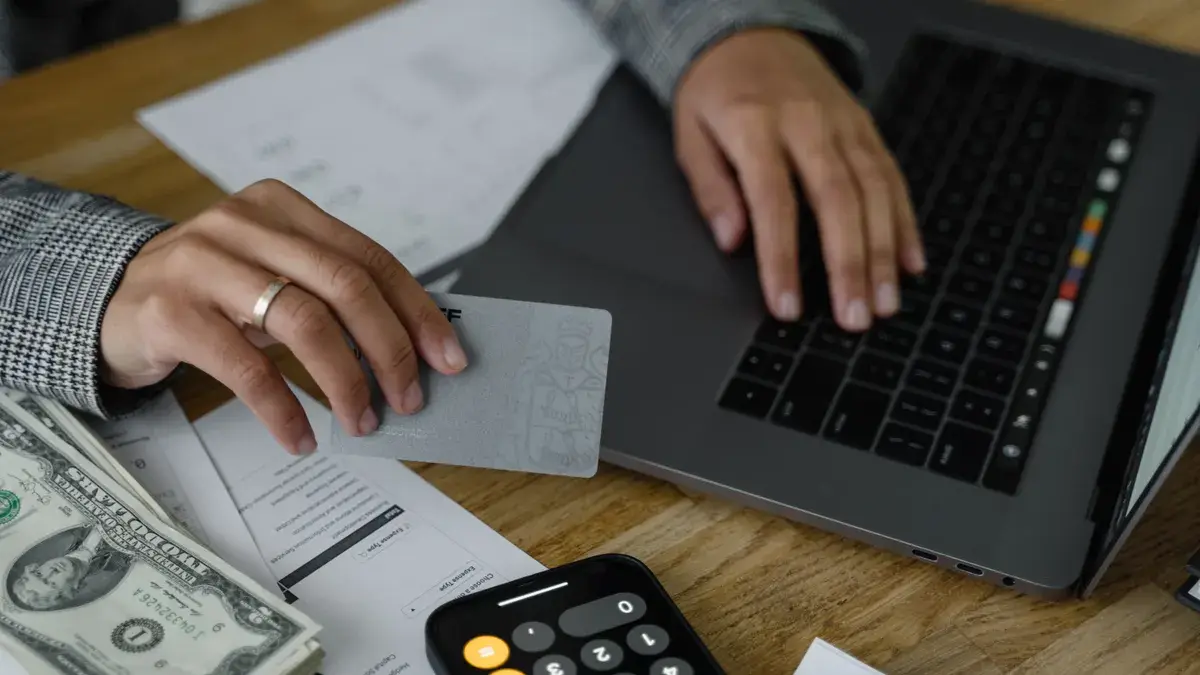
You front the money, submit the claim, and wait for the insurer’s decision. That is the normal path for out-of-pocket vet payment before reimbursement on most policies that use a reimbursement model, and it does not usually change the claim itself.
At checkout, after an exam, X-ray, or emergency visit, the clinic hands you a bill that has to be settled before you leave. You pay by card, cash, or another accepted method, then send the claim packet to the insurer with the itemized invoice and receipt. See the ASPCA Pet Insurance guide and NAPHIA for background on reimbursement-style policies.
Payment at the clinic does not mean the claim is approved. Not even close. Approval still depends on policy terms, waiting periods, deductibles, exclusions, and whether the service is covered.
- You may get reimbursed later for all, part, or none of the bill.
- The insurer may ask for missing documents before it makes a decision.
- A clean payment receipt and itemized invoice help avoid back-and-forth.
- If the claim is denied, the clinic payment still stands.
This is information, not financial advice; pet insurance terms, payment rules, and reimbursement limits vary by country and by policy, so a qualified adviser should be consulted for your own situation if the bill affects your finances.
Why the receipt and invoice matter so much
Your payment receipt proves the bill was paid, and the itemized invoice shows what was charged. Without both, a claim can stall even when the treatment itself was covered, so you may want to confirm the insurer’s documentation rules or consult a professional if the bill is large.
Picture a $1,200 vet bill, but the only paper you kept shows the card total and not the line items for exam fees, lab work, or medication. The insurer may still process the claim, but it has less to verify. That gap can feel absurdly small and still trip the whole file.
Sometimes “receipt” and “invoice” are used differently. A receipt proves money changed hands. An invoice lists the services. Some clinics print both on one page; others separate them.
Keep these items together:
- Itemized invoice from the vet
- Proof of payment, such as a card slip or emailed receipt
- Claim form or online submission confirmation
- Any referral, medical notes, or discharge summary the policy asks for
- Date of service and pet name exactly as shown on the bill
If any of those are missing, the insurer may ask for a resubmission. That can add days or longer, depending on the insurer’s workflow and how fast the clinic responds.
Can you use a credit card for the vet bill?
Yes, a credit card is a common way to pay a vet bill before reimbursement, but it shifts the timing problem from the clinic to your card statement. That helps if you need to leave the clinic with the bill settled, but it can create interest charges if the claim pays later than you expect. See the CFPB credit card basics for general repayment and interest information.
The surgery deposit is due now, the insurer has not approved the claim yet, and your savings are thin. A card can keep the visit moving, but the balance still lands on your monthly statement.
The card is a bridge, not a cure. That matters if you are comparing payment methods.
- If you can pay the card in full before interest starts, the bridge is shorter.
- If you cannot, the reimbursement may arrive after interest has already started.
- If the claim is denied or reduced, you still owe the card balance.
A debit card, cash, check, or clinic payment plan changes the mechanics but not the core issue: you are still paying before reimbursement. The method that fits best is the one you can cover without missing rent, loan payments, or other fixed bills.
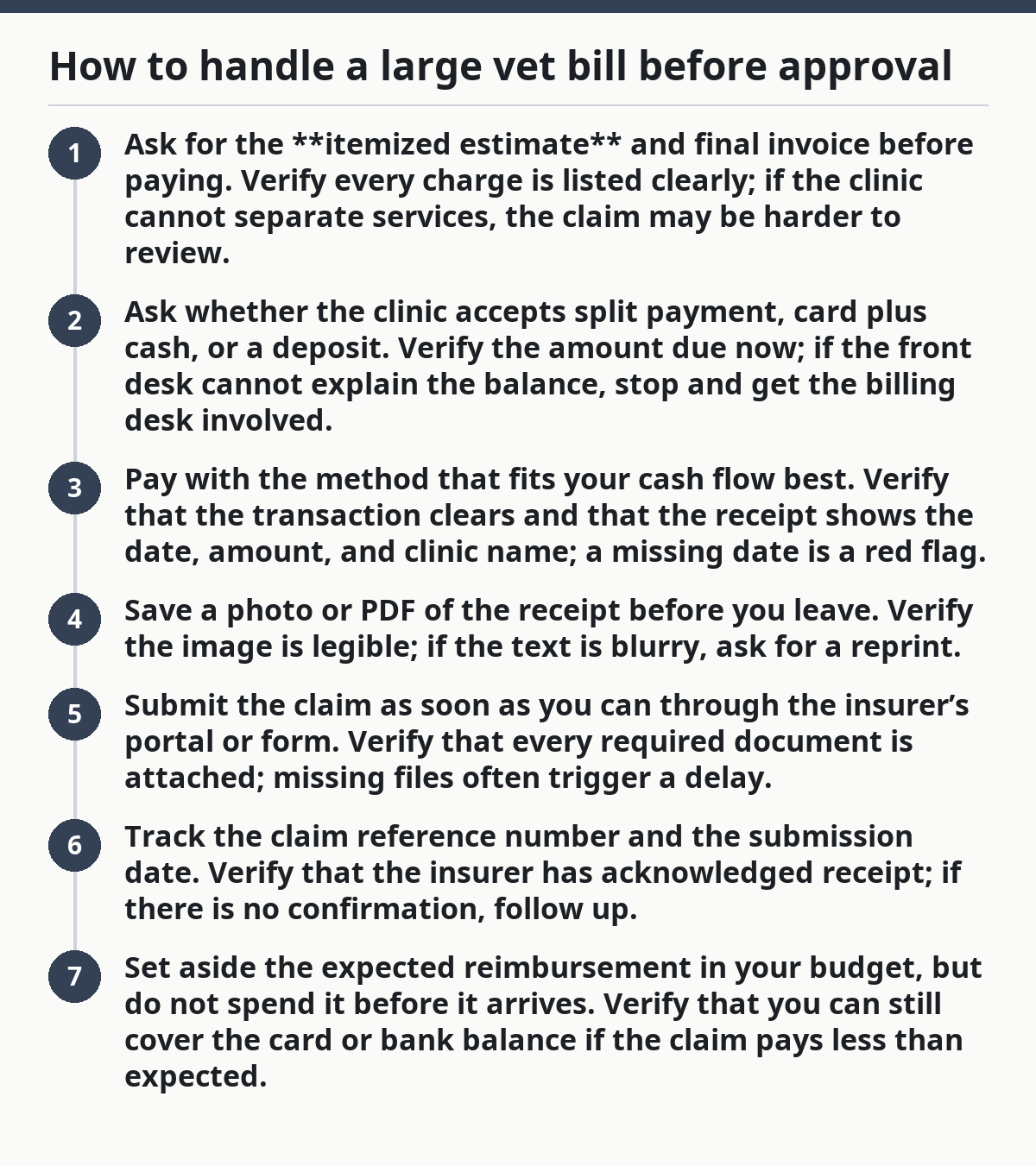
How to handle a large vet bill before approval
A large vet bill needs a quick cash-flow plan before you sign the payment slip. The goal is not to guess the claim outcome; it is to keep the treatment bill from breaking your month, and a pet insurance adviser can help if the numbers are tight.
The estimate turns into a much larger final bill after diagnostics, fluids, anesthesia, or an overnight stay. Now what? You need to decide in the next 10 minutes how to pay, what to keep, and what to send to the insurer.
Then use this order:
- Ask for the **itemized estimate** and final invoice before paying. Verify every charge is listed clearly; if the clinic cannot separate services, the claim may be harder to review.
- Ask whether the clinic accepts split payment, card plus cash, or a deposit. Verify the amount due now; if the front desk cannot explain the balance, stop and get the billing desk involved.
- Pay with the method that fits your cash flow best. Verify that the transaction clears and that the receipt shows the date, amount, and clinic name; a missing date is a red flag.
- Save a photo or PDF of the receipt before you leave. Verify the image is legible; if the text is blurry, ask for a reprint.
- Submit the claim as soon as you can through the insurer’s portal or form. Verify that every required document is attached; missing files often trigger a delay.
- Track the claim reference number and the submission date. Verify that the insurer has acknowledged receipt; if there is no confirmation, follow up.
- Set aside the expected reimbursement in your budget, but do not spend it before it arrives. Verify that you can still cover the card or bank balance if the claim pays less than expected.
The numbers that matter are plain: the bill amount, the amount you paid today, and the expected reimbursement. If those three figures are not written down, the claim is harder to manage.
What can go wrong after you pay first?
The claim can be reduced, delayed, or denied, even when the clinic bill has already been paid. That is the part many owners miss, and it is the part that hurts the most when cash is tight.
You paid a $900 vet bill at the desk, mailed the receipt, and then the insurer asks for more documents or says part of the treatment is outside the policy. The clinic has its money; the reimbursement is now a separate process.
Common mistakes:
- Submitting only the card slip. The insurer may need the itemized invoice too. The fix is to send both documents together.
- Assuming payment equals approval. It does not. The fix is to wait for the claim decision before counting the reimbursement in your budget.
- Throwing away the paper trail. The consequence is a stalled claim or no proof of payment. The fix is to keep copies for the full claim period.
- Paying from the wrong account and losing the receipt. The consequence is a messy audit trail. The fix is to match the payment record to the invoice name and date.
- Missing the clinic’s billing note. The consequence is confusion over what was actually charged. The fix is to ask for the final itemized bill before leaving.
If the bill is large, treat the reimbursement as uncertain until the insurer confirms it in writing.
When paying first is the wrong move
Paying first can be the wrong move when the bill would strain your household cash or when the clinic can offer another arrangement that fits the moment better. The method works only if you can cover the gap without triggering another money problem.
The clinic wants payment now, but your checking account is already thin and the claim may take time to settle. You are not just dealing with a vet bill; you are deciding whether the rest of the month still works.
Before you hand over a card, stop and slow down in these situations:
- You do not have enough cash to cover the full bill: Paying first may create overdraft fees or missed bills — ask the clinic about payment options before handing over a card.
- The bill is missing itemized charges: The claim may be harder to support — request a detailed invoice first.
- The policy documents are unclear about the service: The claim may be partly or fully excluded — check the policy wording before you rely on reimbursement.
- You need the reimbursement to pay rent or utilities: The timing mismatch can hurt your budget — build a backup plan before you pay.
- The clinic cannot provide a receipt right away: The paper trail is weak — do not leave without proof of payment or a way to get it fast.
This approach is not for people who need certainty about cash timing. It is for people who can float the bill for a while and still stay stable.
What to ask the clinic before you pay
Ask for the exact billing documents and payment options before the card is run. That takes less than 5 minutes and can save a lot of chasing later.
You are standing at the desk, the line is building behind you, and you want to get home. A few direct questions now can keep the claim cleaner later.
Ask these:
- Can I get an itemized invoice?
- Can I get a receipt showing payment today?
- Does the invoice list the pet’s name and the date of service?
- Can you send the documents by email as a PDF?
- Do you offer split payment or a deposit?
- If I need to file a claim, is there anything else you can print for the insurer?
If the staff hesitates on the receipt or invoice, slow down. A simple documentation problem can become a reimbursement problem later.
Where this fits in the bigger claim workflow
Paying the vet first is one step in the larger pet insurance claims and reimbursement workflow. The payment itself does not finish the process; it just creates the records the insurer will later review.
The treatment is done, the bill is paid, and now the paper trail has to carry the rest of the load. The claim still needs to move through the insurer’s review, and that part is separate from checkout.
The practical rule is straightforward:
- Pay the clinic if the bill is due.
- Keep every billing document.
- Submit the claim with the right paperwork.
- Wait for the reimbursement decision.
- Reconcile the payment against whatever the insurer sends.
That sequence is why the receipt matters so much. It turns a vet visit into a claim file.
Will pet insurance reimburse me if I already paid?
Yes, many policies reimburse you after you pay, as long as the treatment is covered and the claim is approved. The payment order usually does not block reimbursement by itself.
You paid the clinic on Monday, sent the claim on Tuesday, and the insurer reviews the file later. If the policy covers the service and the paperwork is complete, reimbursement can still follow.
But “can” is not “will.” Coverage rules, exclusions, waiting periods, and missing documents can still reduce or stop payment. For policy-specific questions, check the insurer’s wording or consult a professional before counting on reimbursement.
What if I can’t afford the full bill upfront?
If you cannot afford the full bill upfront, say that before the final charge is run and ask the clinic what payment options exist. Do not assume the insurer will solve the cash gap in time.
The invoice is ready, but your account will not cover it without overdrawing. The clinic may still have options such as a deposit, split payment, or a card on file, but the answer depends on that practice’s policy.
If none of those work, ask for the billing desk before you leave the exam room. A same-day conversation is usually easier than trying to fix a declined payment after the fact.
Drafted with AI; not yet reviewed by a person.