
Last updated: November 19, 2026
Quick Answer: Yes—many pet insurers let you apply for Can You Get Pet Insurance Without a Vet Exam? without a vet exam, but they may still ask for medical records, basic health details, or a recent veterinarian visit before they issue a policy. The sections below clear up when a vet exam is skipped, when records matter, and what can still block approval.
Key Takeaways
- A vet exam is not always required to apply, but it may still be requested later in the process.
- Pet insurers often rely on medical records, age rules, and breed screening instead of a new exam.
- A clean application is not the same as active coverage; underwriting can still change the outcome.
- Missing records or a long gap in vet care can slow approval or lead to questions.
- This is information, not financial advice; for your own situation, speak with a qualified adviser.
Can you apply without a vet exam?
Yes—many pet insurers accept an online application with no same-day vet exam, especially if they can review records instead. That usually means the insurer uses medical underwriting—a review of age, breed, symptoms, and past care—to decide whether to offer a policy and on what terms.
Picture this: you’re comparing plans after a surprise clinic bill, and the last thing you want is another appointment just to apply. What matters is whether the insurer needs a fresh exam, or whether your pet’s existing records are enough for the application requirements.
Most readers run into one of three setups:
- No exam required at application
- Records requested after you apply
- An exam required only in special cases, such as a gap in care or incomplete records
The exact rule depends on the pet insurer, the pet’s age, the breed, and what the records already show. Some companies want a recent exam on file; others will accept a short health questionnaire and then verify details through medical records.
A clean form is not the same thing as approval.
That’s the catch.
For a broader overview of the policy side, the hub on pet insurance basics covers the bigger picture without repeating this page’s detail.
What pet insurance application requirements usually include
Pet insurance application requirements usually start with basic identity and health details, not a live physical exam. An application often asks for the pet’s name, species, breed, date of birth or age, sex, spay or neuter status, ZIP code, and whether the pet has had recent signs of illness or injury.
Picture this: you’re sitting at your kitchen table with a phone in one hand and your pet’s records in the other. The insurer wants enough information to sort your pet into an age band, flag breed restrictions, and see whether anything in the history needs review.
Here’s what commonly comes up, and you should consult the insurer or a licensed professional if anything is unclear:
- Age and breed screening to check eligibility
- A short health declaration about current symptoms
- Previous diagnoses, medications, or surgeries
- Sometimes the name of the veterinarian and the clinic address
- Permission for the insurer to request medical records
The first gate is usually administrative, not physical.
That said, the records can still be the real bottleneck.
If the insurer sees a gap, an old record, or signs of a pre-existing issue, it may ask for more paperwork. That is not the same as demanding a new exam, but it can still delay the application.
How medical records can replace a vet exam
Medical records can stand in for a vet exam when the insurer can verify your pet’s recent health history from the chart. A medical records review is a check of past visits, vaccines, diagnoses, and exam notes, often from the last 12 months or from the pet’s most recent documented visit, depending on the insurer’s rule; if you are unsure, consult the insurer or a veterinarian. Source: AAHA.
Picture this: your pet has been seen regularly, and the clinic already has notes that cover weight, dental status, vaccines, and any ongoing conditions. In that case, the insurer may not need a new physical exam because the records already answer the underwriting questions.
The records usually help the insurer judge, and you should consult a professional if the file is unclear. Source: North American Pet Health Insurance Association.
- Whether the pet is currently stable
- Whether there are signs of a chronic condition
- Whether the pet has a history of lameness, skin disease, vomiting, or urinary trouble
- Whether any issue might be treated as pre-existing
Here’s the practical part: if the record is thin, the insurer has less to go on. A 6-month-old puppy with a full vaccine and wellness history is easier to review than a 9-year-old cat with no visit in years.
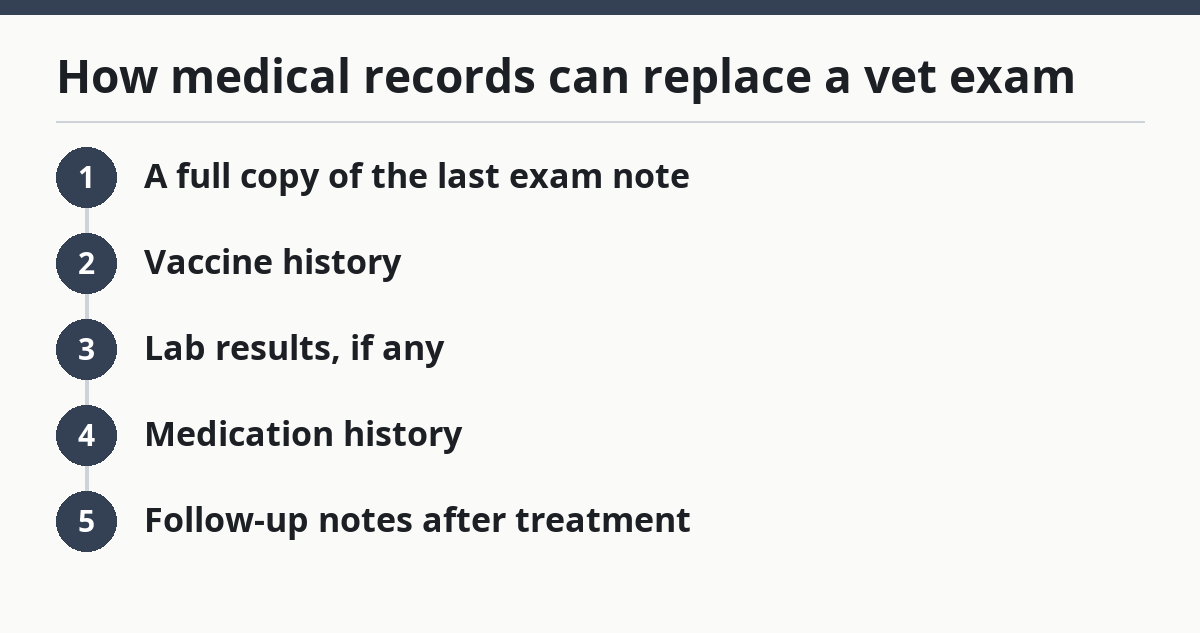
If the clinic chart is incomplete, the insurer may ask for more documentation, though the exact request can vary by company. Source: North American Pet Health Insurance Association.
- A full copy of the last exam note
- Vaccine history
- Lab results, if any
- Medication history
- Follow-up notes after treatment
That does not always mean rejection.
It means the underwriter needs more evidence.
When does an insurer ask for a vet exam?
An insurer is more likely to ask for a vet exam when the pet’s history is incomplete, the age is higher, or the application raises a health question. The exam request is usually a way to verify current status, not a universal rule across all pet insurance.
Picture this: you’re applying for a senior dog with a past limp, or for a cat whose chart hasn’t been updated in a long time. The insurer may want a current exam because the old file doesn’t tell them enough about today’s condition.
Common triggers include, and the insurer may still decide case by case:
- No recent medical record on file
- A long gap in routine care
- Age-related screening concerns
- Breed-related risk screening
- Answers on the application that mention current symptoms
- A recent surgery, treatment, or unresolved problem
Some insurers use a vet exam requirement only after the application starts, while others never ask for one unless the records look thin. That difference matters.
Not every request means the same thing.
A wellness exam, a recheck, and a full diagnostic visit are not interchangeable.
If you’re facing a request, look closely at the wording. The insurer may be asking for a recent exam date, a record release, or a full physical checkup. Those are different asks, and they affect timing and cost in different ways.
What to check before you apply
You should check the insurer’s age rules, breed rules, and record rules before you submit the form. That saves time and helps you avoid an application that stalls because a document or date is missing.
Picture this: you want to move fast, but the form only looks easy on the surface. The real issue is whether your pet fits the company’s screening rules and whether your records are current enough to support the application.
Use this short check:
- Confirm the pet’s exact age as the insurer defines it
- Check for breed restrictions or breed-related exclusions
- Gather the clinic name, address, and phone number
- Find the latest exam date and vaccination record
- Note any ongoing conditions or prescriptions
- Ask the clinic how long it takes to release records
- Save screenshots or copies of anything you submit
A missing date is a common problem.
So is a mismatched breed name or nickname.
If your pet hasn’t been seen in a while, the insurer may still accept the application, but a newer record can make the review smoother. If the company asks for a release, send it quickly; delays often happen because the clinic has not forwarded the chart yet.
For general policy terms, check the insurer’s written application page rather than a sales script. The wording on that page usually tells you whether a vet exam is required, optional, or only needed in edge cases.
When the standard approach does not apply
The standard “apply online and send records” approach does not fit every pet or every file. Some applications need extra review, and some should not be rushed because the history is too thin to support a fair decision.
Picture this: you’re trying to get coverage after a clinic visit, but the pet has an unresolved issue or a missing medical history. In those cases, a simple no-exam application can turn into a records chase, and the answer may depend on what the chart shows.
No recent veterinary records: The insurer may have nothing to verify — Ask the clinic for the most recent exam note before you apply.
Ongoing symptoms: Current vomiting, coughing, limping, or skin trouble can trigger underwriting scrutiny — Expect questions and be ready for a records review.
Breed screening flags: Some breeds get closer review or limits — Check the insurer’s breed list before you submit.
Senior pet age band: Older pets often face tighter screening — Confirm the age cutoff and ask whether a recent exam date is needed.
Missing medication history: Unknown drugs or treatments can complicate the file — Gather the prescription list and clinic notes first.
These situations do not automatically mean “no.”
They mean the application may need more proof than a basic form.
If you want a clean path, gather the records before you click submit. That is often faster than answering follow-up emails one by one.
The mistakes people make with no-exam applications
The biggest mistake is assuming “no vet exam” means “no health review.” It doesn’t. The insurer can still review medical records, screen for breed limits, and ask follow-up questions if the application and the chart don’t match.
Picture this: you submit the form in 10 minutes, then spend a week trying to fix missing details. That happens when people treat the application like a simple checkout instead of an underwriting file.
Common mistakes:
- Skipping the records request: This can stall approval. Use the clinic release form early.
- Guessing at breed or age: A wrong entry can trigger a correction or delay. Use the exact record.
- Ignoring past conditions: Omissions can lead to underwriting problems later. List known issues plainly.
- Not checking breed rules: Some pets are screened more closely. Read the insurer’s breed list first.
- Waiting too long after the last visit: Old records may not answer current questions. Ask whether a newer exam is needed.
The better move is simple.
Match the form to the file.
If the insurer asks for a record and the clinic is slow, call the office and ask for the chart release process. If the pet has not been seen recently, ask whether the insurer will accept older records or wants a new exam date.
Do all pet insurers require a vet exam?
No, not all pet insurers require a vet exam, but many still rely on records and health screening. Some policies can be started with no exam on the day you apply, while others may require a current exam note or a recent visit before they finish underwriting.
Picture this: you’re comparing two plans that look similar on the surface, but one wants a vet exam and the other mainly wants records. That difference can change how long the application takes and how much back-and-forth you face with the insurer.
Here’s the simplest way to think about it:
- Some insurers ask for no exam at the start
- Some insurers accept records in place of an exam
- Some insurers ask for an exam only if the file is incomplete or the pet is higher-risk
The key term is underwriting: the insurer’s review of risk before it offers terms. That review can happen with records, a questionnaire, or a vet exam, depending on the company.
So the short answer is yes, you can often get pet insurance without a vet exam.
The longer answer is that the insurer may still want proof of your pet’s health.
This is information, not financial advice. For your own situation, especially if the pet has medical history or the coverage terms are unclear, a qualified adviser can help you read the policy language.
Can an insurer ask for vet records later?
Yes, an insurer can ask for vet records later if it needs more detail to process a claim or review the application. That can happen even when the policy started without a vet exam.
The request is usually about documentation, not punishment. If the chart is unclear, the insurer may ask for notes, lab work, or treatment history to confirm what it already knows.
What if my pet has not seen a vet recently?
Your pet may still be able to apply, but the insurer may need older records or may ask for a current exam. A long gap in care can make underwriting harder because there is less recent evidence of health.
If the clinic has not seen your pet in a while, ask for the last complete exam note and vaccine record before you apply. That usually gives the insurer more to work with than a blank chart.
How do I know if records are enough?
Because the records are the insurer’s main substitute for a vet exam, they are probably enough when they show a recent exam, clear notes, and no unresolved issues that the insurer needs to question. If the file is thin, missing, or out of date, expect follow-up.
The safest move is to read the insurer’s application instructions closely and gather the chart before you submit. That keeps the process moving and reduces the chance of a delay.
Drafted with AI; not yet reviewed by a person.