Last updated: November 19, 2026
Quick answer: pet insurance usually needs 4 record types for a claim — the visit notes, the itemized invoice, the diagnosis code if the clinic uses one, and any lab results or treatment history that explain what happened. If the insurer cannot see when the problem started, what the vet found, and what was done, the claim often stalls. For the specific rules in your policy, check your insurer’s claim page and ask a veterinary professional if anything is unclear.
Key takeaways
- Insurers do not just want a bill; they want proof of diagnosis, timing, and treatment.
- The most useful records are the veterinary notes, the itemized invoice, diagnosis codes, and lab results.
- A clean claim file shows the story from first symptoms through follow-up care.
- Missing notes do not always block a claim, but they can slow review or trigger a request for more paperwork.
- This is information, not financial advice; rules vary by insurer and country, so a qualified adviser should be consulted for your own situation.
What counts as vet records for a claim?
Vet records for a claim are the clinic documents that show why your pet was seen, what the vet found, and what care was provided. In plain terms, that means medical notes, the invoice, and any test output that supports the claim. For policy wording, compare your insurer’s checklist with the clinic’s records and, if needed, check the American Veterinary Medical Association for general veterinary record guidance.
The most common pieces are straightforward. The itemized invoice lists each charge on its own line, not just one total. Veterinary notes are the exam notes, history, assessment, and plan from the visit. A diagnosis code is the clinic’s coded label for the condition, if the practice uses one. Lab results cover bloodwork, urinalysis, cytology, imaging reports, or similar test records.
Insurers use those records to check timing and medical history. That matters because pet insurance claims are usually judged against the policy terms, not just the size of the bill. A record set that shows the date of onset, the exam findings, and the treatment given is much easier to review than a lone receipt, according to general claim guidance from the North American Pet Health Insurance Association.
The key point is that the insurer needs context, not just cost. A $0 line for “exam” on a bill still tells less than a note that explains why the exam happened and what the vet suspected.
Which documents matter most?
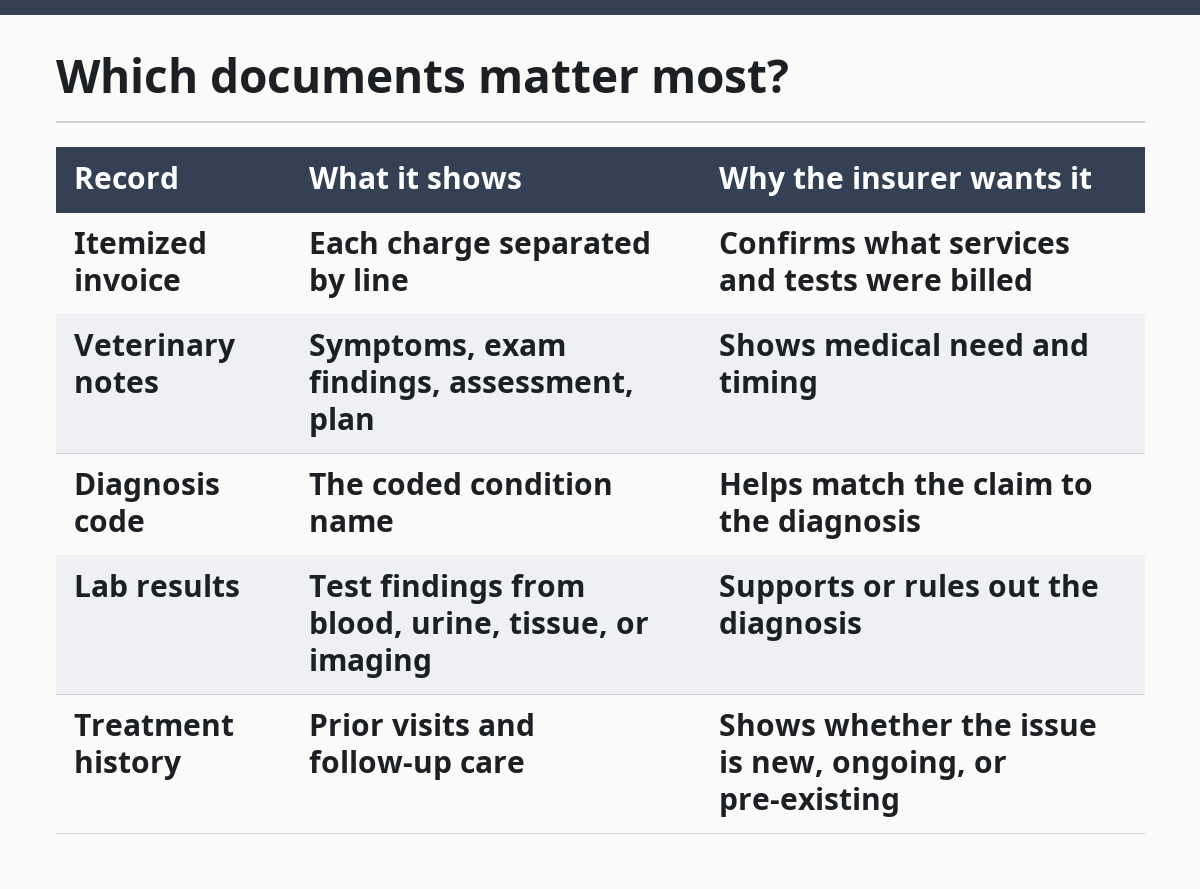
The itemized invoice, the veterinary notes, the diagnosis code, and the lab results matter most because each one answers a different question. One document rarely does the whole job, and claim instructions from carriers often ask for the full set rather than a bill alone.
Here is how the main records compare:
| Record | What it shows | Why the insurer wants it |
|---|---|---|
| Itemized invoice | Each charge separated by line | Confirms what services and tests were billed |
| Veterinary notes | Symptoms, exam findings, assessment, plan | Shows medical need and timing |
| Diagnosis code | The coded condition name | Helps match the claim to the diagnosis |
| Lab results | Test findings from blood, urine, tissue, or imaging | Supports or rules out the diagnosis |
| Treatment history | Prior visits and follow-up care | Shows whether the issue is new, ongoing, or pre-existing |
A generic bill can leave too many gaps. For example, an invoice may show an x-ray charge, but the notes explain whether the x-ray was done because of limping, trauma, or a recheck. That difference can matter in review.
Not every clinic uses the same format. Some record systems print a diagnosis code automatically; others put the diagnosis in plain language. Some clinics can send a full medical record in one PDF, while others split notes, labs, and billing into separate files. The claim still works best when the pieces line up on dates and match the same visit, and that is consistent with standard recordkeeping advice from the Cornell University College of Veterinary Medicine.
How do I gather the right records?
The right records come from the clinic that treated the condition, and the fastest claims are usually the ones where the invoice, notes, and test results all cover the same date range. A complete file should read like one story, not three unrelated papers.
- Start with the exact visit date. Pull the appointment date from your invoice or portal and match it to the vet record. Verify that the date, pet name, and clinic name appear on every page. A mismatch is a problem because the insurer may not know which visit supports the claim.
- Request the itemized invoice. Ask for a line-by-line bill, not a summary total. Verify that each charge is named, such as exam, lab panel, x-ray, or medication. A flat total is a problem because it hides what was actually done.
- Ask for the veterinary notes from that visit. These notes usually include the history, physical exam, assessment, and treatment plan. Verify that they mention the symptoms, the vet’s findings, and the reason for the tests. If the notes only say “recheck” with no details, the claim may need more support.
- Include the diagnosis code or written diagnosis if the clinic provides one. Some clinics use coded billing or medical terminology; others write the diagnosis in plain English. Verify that the diagnosis matches the symptoms and the invoice date. A problem appears when the record names one condition but the bill suggests a different reason for care.
- Attach all lab results tied to the claim. That can mean bloodwork, urinalysis, stool tests, cytology, biopsy summaries, or imaging reports. Verify that each result carries the pet’s name and date. Missing identifiers are a problem because the insurer may not be able to place the result with the right visit.
- Add treatment history if the condition has been seen before. Include prior exam notes, follow-up notes, or discharge instructions that show what changed over time. Verify that the timeline is clear across visits. A gap in history can make a case look incomplete or can suggest the problem was already ongoing.
- Check that the file is readable. Export as PDF if possible, and use a clear scan unless a photo is the only option. Verify that margins, dates, and signatures are legible on a phone screen. A blurry scan is a problem because the insurer may ask for the same record again.
- Save the submission set before sending it. Keep one copy with the invoice, notes, codes, and labs together, even if the insurer wants them uploaded separately. Verify that every file opens and the page count is right. Missing pages are a problem because a claim can look incomplete even when you already had the right papers.
This is the part many people miss: the insurer is trying to reconstruct the medical timeline. A file that starts with a lab result and ends with a bill is less useful than one that begins with the first symptom note and ends with the discharge plan.
What if the clinic record is thin?
A thin record usually means the claim can still be filed, but it may need extra support or a follow-up request to the clinic. The record does not need to be long; it needs to answer the right questions.
A short note that names the pet, date, complaint, exam findings, and treatment can be enough for a simple claim. A one-line note with no diagnosis, no exam details, and no link to the invoice is the weak version. When that happens, the insurer may ask for more records, which can slow review by days or longer depending on the carrier.
One common gap is routine care with little detail. Another is an emergency visit where the clinic’s first priority was treatment, not paperwork. In both cases, the invoice alone is rarely enough if the claim concerns the diagnosis itself. The insurer may want the chart note or discharge summary to show why the treatment was needed.
A clinic can sometimes send the missing piece later, but that is not ideal. The better move is to ask for the medical record, the diagnosis, and the lab pages together before you submit the claim file.
When should you stop and ask the clinic for more?
You should stop and ask for more records when the paperwork does not clearly match the visit, the diagnosis, or the bill. In pet insurance claims, that is not a minor issue; it can change how the claim is reviewed.
The invoice has no line items: it shows a total but not what was charged — ask for an itemized invoice, because a lump sum does not prove which services were billed.
The notes do not mention the condition you are claiming: the chart may not connect the visit to the problem — request the veterinary notes or discharge summary before filing.
The diagnosis is missing or unclear: the record does not name the condition in plain language or code — ask the clinic to send the diagnosis page or the full record set.
Lab results are mentioned but not attached: the chart refers to tests that are not in your file — request the test report, not just the bill for the test.
The dates do not line up: the note, bill, and results do not show the same visit or same pet — stop and confirm the correct record, because the wrong date can make the claim look unsupported.
The condition has been seen before: the insurer may need earlier notes to understand treatment history — ask for prior records, since the current visit may not tell the full story.
These are not signs that the claim is doomed. They are signs that the paper trail is incomplete. The fix is usually more documentation, not a new claim form, and the insurer’s own instructions should confirm what it needs.
What mistakes cause delays?
The biggest mistakes are simple paperwork errors that leave the insurer guessing. Most of them are fixable, but each one costs time.
One mistake is sending only the receipt. The consequence is a stalled review, because the bill does not explain the medical reason for care. The better alternative is to include the notes and diagnosis page with the invoice.
Another mistake is submitting lab charges without the lab report. That can trigger a request for the missing test result, which slows the file down. The better alternative is to attach the report that shows the date, the test name, and the result.
A third mistake is using screenshots from a patient portal when a PDF exists. Screenshots often cut off the margins, page numbers, or date stamp. The better alternative is a full export or the clinic’s official record.
A fourth mistake is mixing records from different pets or different visits into one upload. That can confuse the review team and may cause a request for clarification. The better alternative is to separate each pet and each visit into clearly named files.
A fifth mistake is forgetting treatment history when the condition is not new. That matters because repeat symptoms can change how a claim is assessed. The better alternative is to include the earlier related notes, even if they look short.
A sixth mistake is waiting too long to ask the clinic for records. Many clinics can send them, but the process can take time, especially if the file is large or the request needs an approved release. The better alternative is to request the full record as soon as the visit is done.
Does every claim need the same records?
No, every claim does not need the same record set, because the needed paperwork changes with the type of visit and the insurer’s review rules. A minor skin check, a surgery, and a chronic condition are not documented the same way.
Routine visits may only need a short note and an invoice, while a claim for a condition with testing may need labs, diagnosis, and earlier treatment history. A dental claim may need chart notes and dental charting. An emergency claim may need the discharge summary if the main chart is sparse.
The key is to match the documents to the story the claim tells. If the claim is about a single exam and a medication, the file can be lighter. If the claim is about a condition that developed over time, the file usually needs more context.
That is why a clean paper trail matters more than a long one. A 2-page record set can be enough for one claim, while a 20-page file can still miss the one page that matters.
Where can I check the insurer’s standards?
The insurer’s own claim instructions are the first place to check, and professional groups can help you understand the record terms they use. The exact file name or format may differ, but the same core documents keep showing up: invoice, notes, diagnosis, labs, and history.
Two useful reference points are the American Veterinary Medical Association and the North American Pet Health Insurance Association, which both discuss pet insurance and medical-record basics in broad terms. Because policy wording and claim rules vary by country and carrier, it is worth comparing your insurer’s checklist with the clinic’s record format before you send anything. If the rules are unclear, a qualified adviser can help interpret your own policy terms.
The main goal is simple: make the medical timeline easy to follow. If the insurer can read the story from records without chasing missing pages, the claim has a much cleaner path.
Can I submit a claim without full records?
Yes, sometimes you can submit a claim without the full record set, but the insurer may ask for more before it finishes review. A receipt alone often is not enough when the claim depends on diagnosis, test results, or treatment history. If records are missing, the safer move is to send what you have and then follow up with the clinic fast.
Do routine visits need medical notes?
Yes, routine visits can still need medical notes if the insurer wants proof of what was examined or treated. A wellness visit may seem simple, but the note can still show the pet’s condition, the vet’s findings, and whether anything was noted for future review. An invoice alone may not tell that story.
What if the vet sends incomplete records?
If the vet sends incomplete records, ask for the missing pages before assuming the claim is done. Incomplete records often mean the invoice, notes, or lab results were split into separate files, not that they do not exist. A quick second request for the full chart, with dates and pet name, usually solves the gap.
Drafted with AI; not yet reviewed by a person.