Last updated: November 20, 2026
A Quick Answer: in What Happens When a Pet Insurance Claim Is Paid to You Instead of the Vet?, the insurer reimburses the policyholder, not the clinic, so you usually pay the vet bill first and then receive the claim payment. The claim can arrive by direct deposit, paper check, or another payout method, and the article below explains what changes and what stays the same.
Key Takeaways
- If the insurer pays the policyholder, the money lands with you, not the clinic.
- A reimbursement check, ach transfer, or paper check is just the payment route; it does not change what the claim covered.
- You still need the bill, the claim decision, and a place to put the funds once they arrive.
- This setup can be useful when the vet already charged you, but it can also create a cash-flow gap.
- If the payout raises tax, debt, or budgeting questions, consult a qualified professional; IRS guidance on taxable and non-taxable payments may also help.
What happens when the insurer pays you?
Because the insurer pays you in What Happens When a Pet Insurance Claim Is Paid to You Instead of the Vet?, you submit a claim, the insurer approves it, and the payment lands in your name instead of the clinic’s. You then receive a reimbursement check or other payout method and handle the vet bill yourself.
That is the normal owner reimbursement model in pet insurance. The insurer does not settle the invoice directly with the practice; it sends the covered amount to the policyholder. In plain terms, the clinic gets paid by you, and the insurer reimburses you later.
The payment method does not change the claim’s substance. A direct deposit, ach transfer, or paper check still reflects the insurer’s decision on the covered amount, deductible, and any policy limit. The route changes; the math usually does not.
What a generic article often misses is the practical split between the veterinary invoice and the insurance payment. Those are two separate transactions. If the bill is $1,200 and the insurer reimburses part of it, the remaining balance is still owed by the policyholder unless the policy or payment arrangement says otherwise. Money moves in different directions. That is the key point.
- To the vet: payment for services rendered.
- To you: reimbursement for covered costs.
- To your bank: deposit, if the insurer uses ach transfer.
- To your mailbox: paper check, if that is the chosen method.
Why would a claim be paid to you?
Because the clinic has already given you the invoice, the claim is often approved after the visit, and the insurer pays you under a reimbursement model rather than direct billing.
Many pet insurance policies work this way because the policyholder is the insured party and the insurer is reimbursing a covered expense after the fact. That is different from a direct payment setup, where the carrier sends funds to the veterinary clinic. The insurer’s internal rules, the claim form, and the payment choice all matter.
The common reasons are straightforward. You may have already paid the clinic. The insurer may only offer owner reimbursement for that policy. Or the practice may not participate in direct payment at all. None of that is unusual. It is a payment structure, not a judgment on the claim itself.
Once you know who the payment is going to, you can plan for the timing and the cash flow. A reimbursement check often means you need enough money on hand to cover the vet invoice before the insurance money arrives. That is the trade-off.
For a broader view of the claims process, the pet insurance claims and payments hub covers the rest of the payment flow without mixing it with this owner-pay setup.
- Reimbursement model: you pay first, insurer pays you back.
- Direct payment model: insurer pays the clinic.
- Policyholder: the person named on the policy and claim payment.
- Claim settlement: the insurer’s approved amount after deductible and any exclusions.
How do you get the reimbursement?
Because the claim is approved and you are waiting for the money to land in the account you use for vet bills, the insurer will usually send a direct deposit, a paper check, or, in some cases, another bank transfer method listed in the policy documents.
Start with the claim decision letter or payment notice. It should show the approved amount, any deduction for the deductible, and the payment method. If it says ach transfer, look for the bank account details you already provided. If it says paper check, make sure your mailing address is current. If it says something else, use the channel the insurer specified, not the one you prefer.
- Read the approval notice carefully. Verify the payout amount, the covered service date, and whether the insurer is paying the policyholder or the vet. If the notice is vague, that is a problem.
- Check the payment method on file. Confirm the bank account, mailing address, or payment portal information. Wrong details can delay the money or send it to the wrong place.
- Match the payment to the invoice. Compare the insurer’s covered amount with the vet’s bill. If the numbers do not line up, check whether the deductible, copay, or excluded item explains the gap.
- Set aside the full vet balance. Keep enough cash to pay the clinic if you have not already. If the reimbursement is smaller than expected, you do not want to be short.
- Deposit the check or ach transfer promptly. A paper check can sit in a drawer and cause trouble later; a transfer should be visible in your account before you move the funds.
- Confirm the deposit cleared. Verify that the amount shows as available, not just pending. If it is missing after the expected posting window, contact the insurer or your bank.
- Pay the clinic and keep proof. Save the invoice, the claim notice, and the payment receipt in one place. If the insurer later questions the claim, the paper trail matters.
- Review the next claim before filing. If the same payment method will be used again, make sure nothing changed with your bank or mailing details. A stale profile can turn a simple reimbursement into a mess.
If the payment notice does not name you as the recipient, stop and ask why before depositing anything. Wrong-placed funds can create account and claim problems. Not worth the guesswork.
What should you check before the money arrives?
Because the claim is already in motion, you need to make sure the payout will be usable when it shows up. The key checks are the payee name, the payment channel, the amount, and your ability to cover the vet invoice in the meantime.
A reimbursement setup can be clean or clumsy depending on the details. The first detail is who the insurer has listed as payee. The second is how the money will move. Direct deposit is often faster to use, but a paper check may be easier to track in some households. Neither one changes the amount the insurer approved.
You should also verify the bank account on file, especially if you changed banks in the last year. A single wrong digit can bounce the payment. If the insurer uses paper checks, confirm the address on the policy file is still current. A moved mailbox can mean a delayed or lost check.
The other check is your own budget. If the vet bill is $800 and you only have $200 available, the reimbursement model creates a short-term gap. That gap is the main reason owner reimbursement feels different from direct billing.
- Payee name matches the policyholder.
- Payment route matches what you expect.
- Mailing address or bank account is current.
- Vet bill can be covered before reimbursement lands.
- Claim documents are saved in one folder or file.
The NAIC explains insurance concepts for consumers, and your insurer’s own policy wording controls the actual payment process. The details vary by country and carrier, so the policy language should guide the final answer. For payment mechanics, the CFPB’s consumer guidance on direct deposit and check handling can also help.
When the standard payment setup does not fit
Because the payment is supposed to go to you, but something about the claim does not look right, that is where the normal reimbursement path needs a pause.
The insurer names the clinic as payee: that means the payment is not owner reimbursement — contact the insurer before you try to cash or deposit anything.
The bank account on file is closed: a direct deposit can fail or reverse — update the account before the next claim and ask how the current payment will be reissued.
The paper check is lost or damaged: the money may still exist, but the instrument does not — request a stop-payment or replacement through the insurer.
The amount does not match the approval notice: the claim may have been adjusted for deductible, exclusions, or partial coverage — ask for the explanation of benefits before assuming an error.
The vet invoice was changed after submission: a corrected bill can change the approved amount — send the updated invoice to the insurer if the claim is still open.
You already assigned the payment to a third party: that can complicate ownership of the funds — get the payment instructions clarified in writing before moving the money.
These are the moments when a routine reimbursement turns into a paperwork problem. Check the claim record and the payment notice. If the issue affects tax treatment, debt repayment, or a disputed bill, consult a qualified adviser or the insurer’s claims team before acting on the payment.
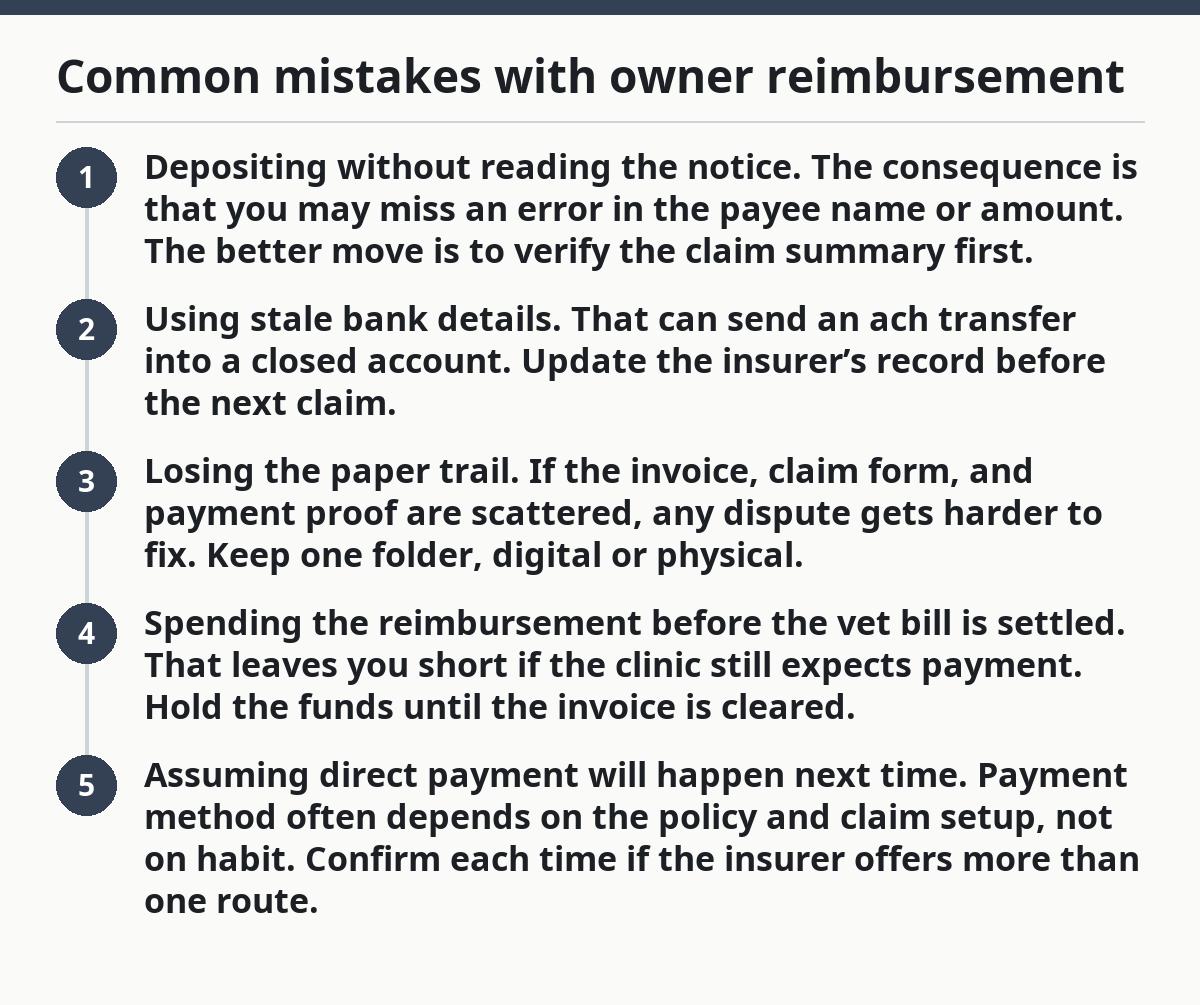
Common mistakes with owner reimbursement
Because the check arrives, the claim can still cause problems if the paperwork or bank details were handled loosely. Most mistakes are simple, and most are avoidable.
- Depositing without reading the notice. The consequence is that you may miss an error in the payee name or amount. The better move is to verify the claim summary first.
- Using stale bank details. That can send an ach transfer into a closed account. Update the insurer’s record before the next claim.
- Losing the paper trail. If the invoice, claim form, and payment proof are scattered, any dispute gets harder to fix. Keep one folder, digital or physical.
- Spending the reimbursement before the vet bill is settled. That leaves you short if the clinic still expects payment. Hold the funds until the invoice is cleared.
- Assuming direct payment will happen next time. Payment method often depends on the policy and claim setup, not on habit. Confirm each time if the insurer offers more than one route.
The correct alternative is dull but effective: match the claim notice to the bill, track where the money is going, and keep the clinic payment separate from the insurance deposit. Boring beats expensive.
What the payment means for your vet bill
Because you have the insurer’s payment in hand, the clinic may still have its invoice on file. The reimbursement does not erase the bill; it gives you the cash to settle it.
That is the biggest point readers miss. When a claim is paid to you, the insurer is not paying the vet’s account balance directly. You may still owe the clinic until you pay it yourself. If the insurer reimburses only part of the invoice, the rest stays on you unless the clinic offers its own payment arrangement.
The practical result is simple. You may need to front the full amount at the visit, or at least enough to cover the non-covered part. Then the reimbursement arrives later by direct deposit, paper check, or another method listed in the policy. The money path is separate from the care path.
If this setup strains your budget, that is a sign to review how the policy handles owner reimbursement before the next claim. Not every household can float a vet bill and wait for the insurer. That is not a failure. It is a cash-flow mismatch.
FAQ
Why does the payment go to me?
The payment goes to you because the policy is set up as reimbursement. The insurer pays the policyholder after approving the covered part of the bill, rather than paying the veterinary clinic directly. That is common in pet insurance and does not mean the claim was handled differently.
Can I choose who gets paid?
Sometimes, but not always. The payee is usually controlled by the policy terms, the claim setup, and the insurer’s payment rules. If the policy is built for owner reimbursement, the insurer may only pay the policyholder. If direct payment is allowed, the insurer or clinic must usually accept that arrangement first.
How do I cash or deposit the reimbursement?
Follow the payment method listed on the notice. A paper check can be deposited or cashed through your bank, while an ach transfer goes straight to the bank account on file. Check the payee name, the amount, and the deposit instructions before moving the funds, especially if the vet bill is still unpaid.
Drafted with AI; not yet reviewed by a person.