Last updated: November 19, 2026
Key Takeaways
- A pet insurance policy type is the coverage category that tells you what a plan will pay for.
- Accident-only pet insurance covers sudden injuries, not diseases.
- Accident and illness coverage is the main medical option because it covers injuries and many illnesses.
- Policy categories are usually the first choice in a quote flow and can change every later page.
A pet insurance policy type is the coverage structure you pick for a pet plan, such as accident-only, accident and illness, or a wellness add-on. What Is a Pet Insurance Policy Type? Accident-Only, Accident and Illness, and Wellness Explained means the policy type tells you what kind of claims the policy will pay, not just what brand sells it. The sections below sort out the differences, what each one usually means, and what people often confuse with coverage.
What does a pet insurance policy type mean?
A pet insurance policy type is the category that separates one plan from another by what it covers. In plain terms, accident-only pays for injury-related care, accident and illness adds sickness care, and wellness usually sits outside medical insurance as routine-prevention coverage or an add-on.
Picture this: you’re comparing two quotes that look similar, but one covers only broken bones and swallowed toys, while the other also covers infections, allergies, and chronic disease. That difference is the policy type. It shapes the claim process, the premium, and the kinds of vet bills that can be reimbursed.
Most shoppers see policy type in the quote flow, the policy summary, or the exclusions page. You’ll also see it grouped with terms like deductible, reimbursement rate, and annual limit. Those are not the same thing. A policy type is the coverage bucket; the other terms are cost-sharing and payment rules.
- Accident-only: narrower medical cover.
- Accident and illness: broader medical cover.
- Wellness: routine care, often separate.
Accident-only pet insurance, in plain English
Accident-only pet insurance covers injuries from sudden events, not disease. Picture this: you’re reading a quote for a young dog or a cat with a habit of climbing, chewing, or bolting at the door. The policy type tells you whether a broken leg or cut paw fits the claim rules.
This type is usually the simplest structure. It may cover things like fractures, wounds, poisonings, and foreign-body ingestion if the event counts as an accident under the policy wording. It generally does not cover ear infections, diabetes, cancer, or other illnesses. That gap is the whole point.
The catch is that “accident” is defined by the insurer, not by the pet owner. A swallowed sock may be covered if the policy treats it as an accident, but a pre-existing digestive issue will not be. Check the definition section, and ask the insurer or a licensed professional if the wording is unclear.
- Covers sudden injury events.
- Excludes sickness and disease.
- Often shows up as the lower-coverage option.
- Can still have deductibles, annual limits, and waiting periods.
What is accident and illness coverage?
Accident and illness coverage is the main medical policy type for pets because it covers both injuries and many types of sickness. Picture this: you’re comparing a plan for a middle-aged dog or cat, and you want one policy structure that can handle both a torn nail and a long vet workup for vomiting or skin trouble.
This type is broader than accident-only. It usually includes diagnostics, treatment, surgery, medications, and hospital care when the problem comes from an accident or a covered illness. Check the policy wording with a veterinarian or insurance professional before you assume a service is included. It still has rules. Pre-existing conditions, waiting periods, and exclusions can limit what gets paid.
The label matters because many people think “illness” means every health problem. It doesn’t. The policy may exclude hereditary issues, bilateral conditions, chronic problems that started before enrollment, or anything the policy names as not covered. The exact wording controls the claim, not the hope.
- Accidents plus covered illnesses.
- Usually the broadest medical policy type.
- Still subject to exclusions and waiting periods.
- Not the same as “covers everything.”
How is a wellness add-on different from medical coverage?
A wellness add-on is for routine care, not unexpected medical problems. Picture this: you’re looking at vaccines, flea prevention, annual exams, and teeth cleaning, and wondering why they’re listed separately from the main policy. Wellness usually pays on a scheduled-benefit basis or as a preventive package, not as accident or illness reimbursement.
That difference matters. Medical coverage responds to a covered injury or sickness. Wellness often deals with predictable care that happens on a regular timeline, such as yearly exams or vaccinations. Some companies sell it as a rider or add-on; some sell a separate wellness plan. The structure is different even when the checkout page makes it look like one bundle.
Wellness is easy to confuse with “better insurance,” but it fills a different job. If the policy summary says “routine care,” “preventive care,” or “wellness benefits,” check whether the plan reimburses bills or just assigns fixed amounts for specific services.
- Routine care, not unexpected illness.
- Often sold separately from medical cover.
- May use fixed benefit amounts.
- Common terms: preventive care, rider, add-on.
How these policy categories show up when you shop
Policy categories show up as the first fork in the quote process, and they can change the rest of the page that follows. Picture this: you’ve entered your pet’s age, breed, and ZIP code, and the site now asks which type of plan you want. That choice usually controls the premium range and the benefit menu.
You may also see the policy type listed in the declarations page, policy brochure, or certificate. The wording can vary by company, but the structure is the same: one line for accident-only, one for accident and illness, and one for wellness or preventive care. Some insurers bundle wellness into the medical plan; others keep it separate.
The important part is that policy type is not the same as “quality.” A narrower plan is not broken just because it covers less. It’s built for a different use case. A broader plan is not automatically the right fit either, because broader coverage can come with a higher premium and more moving parts.
- Quote page selection.
- Policy summary and declarations page.
- Benefit chart and exclusions section.
- Renewal paperwork, where changes can appear.
What people confuse with policy type
Policy type is often confused with policy features, and that confusion leads to bad comparisons. Picture this: you’re looking at two plans that both say “accident and illness,” but one has a 90% reimbursement rate and the other has a 70% rate. That difference is not policy type; it is a payment setting.
A deductible is another common mix-up. It is the amount you pay before reimbursement starts, and it can be annual or per incident depending on the plan. Annual limits, waiting periods, and reimbursement percentages are also separate from the policy category. They sit beside the policy type, not inside it.
People also mix up wellness with insurance. Wellness can help with routine spending, but it is not the same thing as medical coverage for an accident or disease. If a page says “wellness,” read the fine print to see whether it is a rider, a package, or a separate policy.
- Policy type = what is covered.
- Deductible = what you pay first.
- Reimbursement rate = what share comes back.
- Annual limit = the cap on payouts.
What to check before you compare policies
The policy type is only the starting point, so the next check is the contract language. Picture this: you’ve narrowed your options to one accident-only plan and one accident and illness plan, but the summary sheet still leaves out what counts as a pre-existing condition. That omission can matter more than the title on the page.
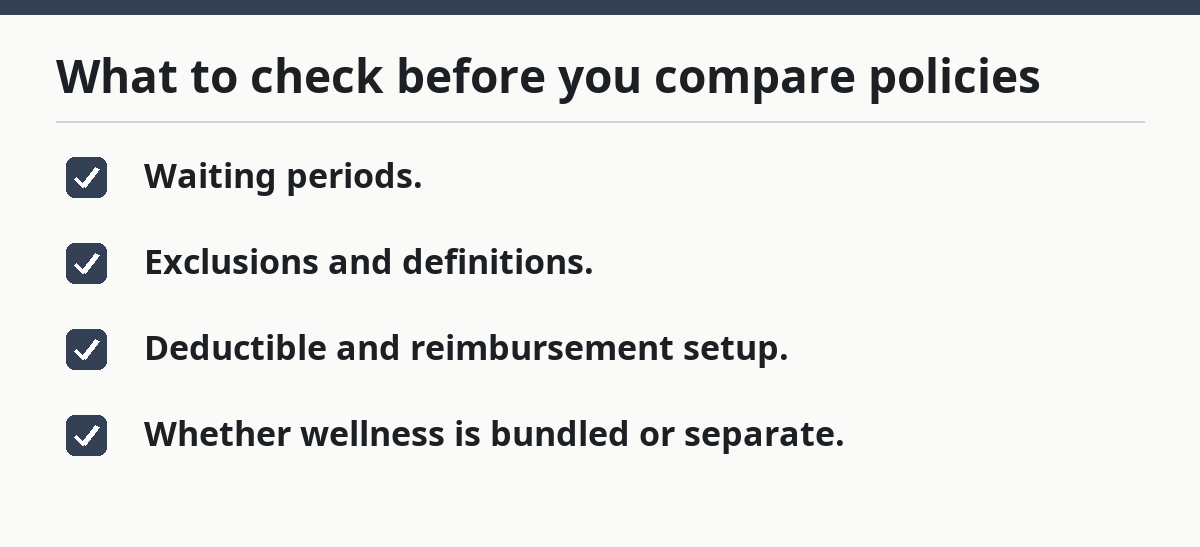
Before you go farther, look for the waiting periods, exclusion list, reimbursement method, annual or lifetime limit, and whether wellness is included or separate. If a company uses terms like “curable pre-existing condition,” “bilateral condition,” or “hereditary condition,” those terms need a close read. Definitions differ by insurer and can change over time.
A cleaner quote sheet can still hide a complicated policy. The real answer is in the contract. If you can’t find the policy wording within a few clicks, that’s a warning sign about transparency, not just design.
- Waiting periods.
- Exclusions and definitions.
- Deductible and reimbursement setup.
- Whether wellness is bundled or separate.
When a standard policy type does not fit
A standard policy type does not fit when the pet already has a known condition that the contract will exclude. Picture this: your cat has an ongoing skin problem, or your dog has a documented knee issue before enrollment. In that case, the policy type still exists, but the main value of the plan can be narrowed by exclusions.
A standard structure also may not fit if the goal is only routine budgeting. A wellness add-on can make sense as a budgeting tool, but it does not replace medical insurance. On the other side, a healthy young pet with no current problems may not need the broadest plan just because it is available.
This is where the word “policy type” matters most. It helps you avoid buying the wrong category for the wrong job. That is better than staring at a premium number and guessing.
- Existing conditions can shrink value.
- Routine-only needs point to wellness, not medical cover.
- Broad cover is not always the best fit.
- Policy wording beats advertising copy.
What a good result looks like
A good result is a policy type that matches the kind of risk you actually want covered. Picture this: you can say, in one sentence, whether the plan is for accidents only, accidents and illnesses, or routine preventive care. You can also point to the deductible, reimbursement rate, and exclusion rules without guessing.
That clarity matters because pet insurance is sold in layers. The category tells you the kind of claims the plan is built to handle; the rest of the contract sets how much comes back and under what rules. The clearer the structure, the easier it is to compare plans honestly.
For background on policy structure and consumer insurance terms, the U.S. National Association of Insurance Commissioners has plain-language consumer material, and the American Veterinary Medical Association also publishes pet insurance guidance. Those sources can help you read the labels before you sign anything. The NAIC consumer glossary and AVMA guidance are useful starting points.
What are the main types of pet insurance?
The main types of pet insurance are accident-only, accident and illness, and wellness coverage or a wellness add-on. Accident-only is the narrowest medical category. Accident and illness is the broader medical category. Wellness is usually separate because it handles routine care rather than unexpected injury or sickness.
How is a wellness add-on different from medical coverage?
A wellness add-on is different because it is built for preventive services, not claims tied to accidents or disease. Medical coverage pays for covered injuries and illnesses under the policy rules. Wellness usually helps with planned care such as exams or vaccines, depending on the contract.
Which policy type is most common?
Accident and illness is generally the most common medical policy type because it covers a wider set of veterinary bills than accident-only. That said, availability and plan design vary by country and insurer, so the most common option in one market may not be the same in another.
Drafted with AI; not yet reviewed by a person.